SERVICES

Milling & Grinding Feed:

The process of product transformation is a crucial one in almost every business as it will determine the business’s profitability and general market competitiveness. In the Industrial sector it is even more crucial to have value adding services orbit the business, it’s stakeholders and product / service offering.

The grinding and / or milling process of industrial service providers is one that determines the service provider’s dominance in the market. It should be a process where costs are kept predominantly low yet not sacrificing quality of the process holistically. If too much time is taken in the grinding / milling process then the manufacturer loses time utility on the product he or she is creating and will eventually struggle to get the right product, at the right place, at the right time – if a business isn’t achieving all of the above, resource allocation needs to be observed and rectified because true business efficiency comes by utilizing all available resources effectively.

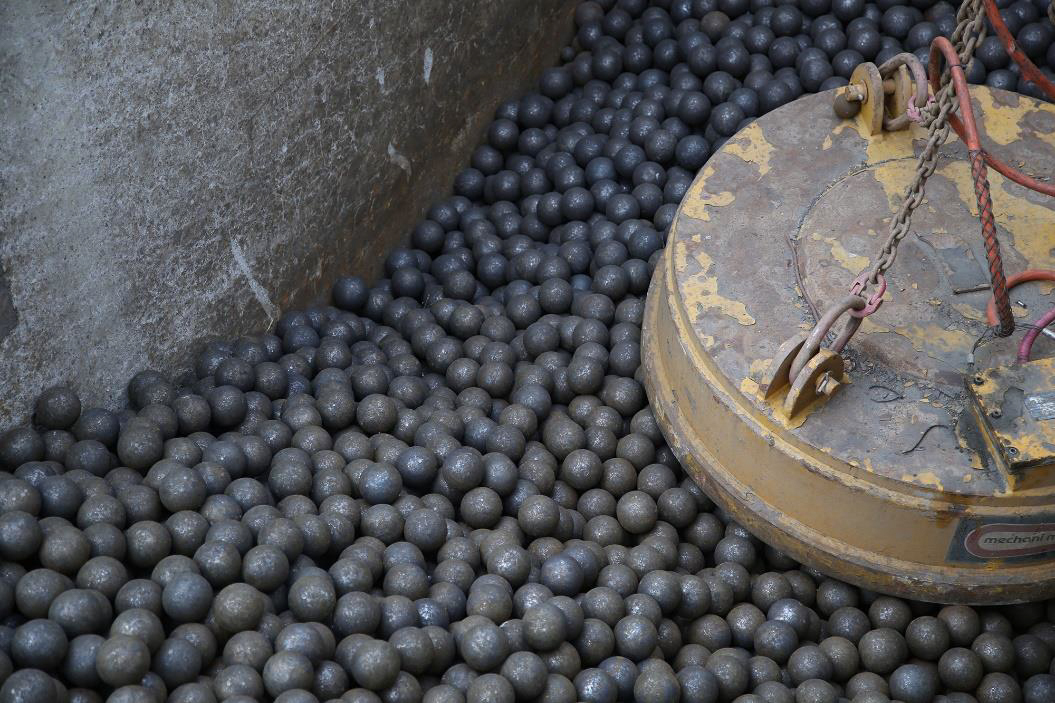
With regards to the product transformation process, it would be beneficial to invest in components that meet International British standards for high chrome castings (BS-4844-1986), are also locally sourced and made and lastly, are produced right to specification of the customers needs. This is where grinding balls (also known as grinding media due to their many applications) are introduced. Grinding balls are usually used in crushing mills. Given their application, they need to exhibit abrasion resistance, toughness as well as hardenability among their material properties.
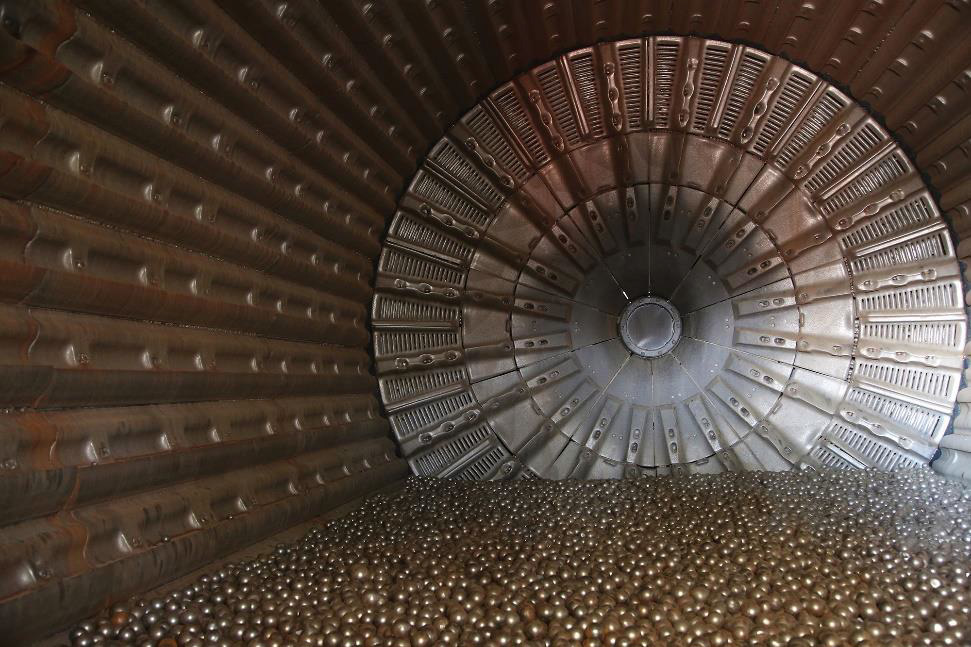
 

The use of ball mills in mineral comminution is a critical step in many extraction and production processes where size reduction to a fine powder is required.

While pan milling and grinding plates is used in some small-scale operations no other process can currently compete with ball milling where high product output is required. There are three types of ball milling processes namely autogenous milling where the products are used to grind themselves without any additional media, semi-autogenous milling where some media is introduced to assist with milling and finally ball milling where almost all the comminution is done using artificial media. Of these processes ball milling is the predominant process used worldwide. A ball mill is a type of grinder used to grind and blend bulk material into QDs/nanosized using different sized balls.


The working principle is simple; impact and attrition size reduction take place as the ball drops from near the top of a rotating hollow cylindrical shell. The nanostructure size can be varied by varying the number and size of balls, the material used for the balls, the material used for the surface of the cylinder, the rotation speed, and the choice of material to be milled. Ball mills are commonly used for crushing and grinding the materials into an extremely fine form. The ball mill contains a hollow cylindrical shell that rotates about its axis. This cylinder is filled with balls that are made of stainless steel or rubber to the material contained in it. Ball mills are classified as attritor, horizontal, planetary, high energy, or shaker.

Grinding media may consist of many different materials depending on the product milled, mill diameter etc. but it must conform to certain parameters to be suitable.

Major considerations are: wear resistance and toughness. While some industries might use relatively exotic materials such as ceramics almost all the mineral comminution processes make use of metal media. These can be in the form of rods (rod mills), short cylinders (i.e., cylpebs) or more commonly elliptical or spherical balls produced using an iron-based alloy (such as chrome). These must be allowed to produce a material with sufficient hardness to withstand the abrasive wear encountered during mill operation and can be manufactured by forging or more commonly casting. Forging is used to produce media in steel and semi-steel (very high carbon steels) where material toughness i.e., resistance to breaking due to impact is a determining factor. Forging processes can be die or roll forging, usually followed by hardening and tempering.

By far the most common alloying element used to produce grinding media of all types is chromium. The use of high carbon ferro-chrome has the benefit of introducing carbon as well as to produce hard chromium carbides which has very good wear resistance. These carbides are however extremely brittle, so attention must be paid to their size and morphology to prevent breakage. An important consideration is the silicon level in the alloy as this has an influence on the carbide structure with high silicon promoting massive carbides and decreased fracture toughness. For this reason, high carbon ferrochrome with low silicon levels such as plasma chrome is preferred to charge chrome.

To balance the carbon level some medium or low carbon ferro-chrome may have to be used if a cheaper source of stainless-steel scrap is unavailable.

Chromium levels in grinding media vary depending on application, mill parameters, downstream processes but most importantly cost considerations. This can range from as low as 2% for chill cast material to as high as 25% in some specialized cases but generally falls in the 5 to 18% Cr range which can be heat treated to high hardness levels with acceptable toughness.

Balls are produced with different chemistries, with chrome contents ranging from 11% to 32% and sizes ranging from 17mm to 100mm. Different heat-treatment cycles are used to impart specific metallurgical properties depending on the intended application. Whether the predominant wear mechanism is abrasion, corrosion, or impact. High chrome grinding media is generally superior to forged steel media in terms of abrasive and corrosive wear. High chrome grinding is of particular importance to the flotation process is high chrome media’s better corrosion resistance, where the surface of the ball oxidizes rapidly to form a passive chromium oxide surface layer which acts as a barrier to further electron transfer, significantly reducing the generation of deleterious corrosion products.

Another benefit to high chrome-grinding is it produces higher PGM (Platinum Group Metals) recovery at a constant PGM concentrate grade, or a higher PGM concentrate grade for a given PGM recovery. This heat-treated chrome ball simply adds value onto the value-adding processes that respective users implement, a study was conducted using 40mm and 70mm grinding media both tested at 18%Cr (Chromium content) which proved that PGM recovery rate on select raw / secondary materials was increased at a steady rate. PGM flotation rate is improved when high chrome-grinding media is used.


Platinum group metals (PGM) are of great financial and industrial importance due to their applications in jewelry, electrical and electronic equipment, dental materials, and, most importantly, in automotive industry as indispensable components of catalytic converters (Johnson Matthey 2018, 2019). The demand for PGMs for industrial applications has increased significantly in the last decade due to the implementation of more restrictive emission legislations in several countries (Raymond and Sebrell 2019).

To date, only about 25% of the global supply of PGM is covered by secondary resources (e.g., spent automotive converters (SAC) and jewelry), which means that the remaining 75% comes from primary resources located in a limited number of geographical areas where mining activities have a high environmental and societal impact (Kamunda et al. 2016; Kleinhenz 2017).

Thus, effective recycling systems for PGM-containing secondary raw materials are of great importance, not only to eliminate hazardous materials from the environment but also to ensure a sustainable supply of the precious metals, while conserving the limited primary resources and maintaining a stable market price (Alonso et al. 2008; Bardi and Caporali 2014).


Supply Capacity:

Ball Size:

Plant Output / 10-Hour shit (Ton):

30

27.016

40

33.540

50

46.200

60

49.140

70

52.920

80

58.800

90

54.880

100

63.960

120

66.240

150

64.320

We manufacture forged grinding balls and high chrome grinding media products supplied to the Platinum, Gold, Ferrochrome, Base Metals, Power Generation and Cement industries.


Copyright © 2022 Eagle African Resources

Products
Base Metals & concentrates
Materials for steel mills and foundries
Alloying metals
Industrial Minerals

Company
About us
Services
Contacts

Get in touch
+27 (0) 79 032 5084
matt@earesources.co.za
www.earesources.co.za